Dear Jacky:
How Can We All Nail Creative Feedback?
Same Brief, Different Apple. Let Me Explain...
I’m sure I can assume that most creatives probably relate to the following scenario: You’ve been presented with a brief, taken it and run, and thought to yourself, I’ve nailed it! Only to be thrown into seemingly endless feedback loops and ultimately told that this isn’t really what they were ‘picturing’. Suddenly something that at first seemed like an easy breezy brief is now taking up unaccounted for time and making unwelcome cameos in your stress dreams.
You might think to yourself, that was absolutely no fault of mine, I did exactly what was asked! Meanwhile the clients are likely sitting there thinking, they said they understood, so how did we get here?
If you’re the artist then obviously it was up to the client to be more clear, right? But if you’re the client, surely it’s the artist's job to make sure they’re delivering what you need! In this article I am going to declare once and for all which side is at fault for a run-away project, so pick your team and prepare your defences.
The ruling is...
Nope I’m only joking. As tempting as it might be for one to absolve themselves of any culpability, the most successful collaborations are actually a product of clear feedback and clever questions. Everyone who is coming together on a brief is a professional in their own fields so bringing these different skill sets together should lay the groundwork for inspiring work. This isn’t achieved by pretending you have all the answers and insisting that you don’t need to ask any questions. On the contrary, showing up ready to embrace both ideas and feedback, while having the insight to ask all questions (big, small, or ‘obvious’) along the way, is what distinguishes the industry superstars.
Mastering the art of giving and receiving creative feedback is in fact what makes one the MVP of any project. The first step to doing that well is: limit it altogether! Hold your eye-rolls right there and stick with me...
Step One: Brief well and ask good questions

There’s a few things we do as JW producers before a project kicks off to ensure that everyone’s expectations are set and more importantly ✨aligned✨ (I know, corporate buzzword, sorry). We often say that the hard work for us producers is before kick-off and that ideally, if we’ve done the prep work sufficiently, the project should run smoothly from there. Of course this is not always the case, but we do everything that we can to start off on the best foot. So for my artists, here’s a defined pre kick-off checklist, derived from our own processes, that you can use to make sure you can move forward with confidence:
Ask for references
Preferably from your own folio! Questions like “what was it in my folio that made you approach me for this brief” or “is there a piece in my folio that shows the style you’re after” are the best way to set the base line of expectations for both parties. Only you know how long your folio piece took to create and that’s a great indicator for how big the scope of this hypothetical job may be.
If you get a general “we just love your work” you can always respond with, “I’m so glad my work is resonating with you! Just so I can lock-in the timing and budget side of things, does this piece show the same level of detail that you’re after?”. If the client doesn’t have any specific references to put forward, offering your own can make sure that your gut feeling on the brief is about right!
And clients, if you're reading along, compliments are always lovely, but pairing them with specifics on exactly which piece is landing well for your project, and why, does everyone a favour. Having both sides in agreement about style and level of detail means everyone can be confident locking in timelines and budgets, and keeps those pesky feedback loops in check.
Call out what you're seeing
So you can be sure that you really do understand what you think you understand. “I’m seeing that you’re leaning towards the colour palette of reference x, but the composition of reference y. Have I understood that correctly?”. Basically, don’t be afraid to clarify what context is being added with each reference. Have they highlighted a certain piece because they like that style of work? Are they actually looking at the overall level of detail?
It’s surprisingly easy to see what you want to see in a reference and start letting your imagination run with it. If not clarified correctly then there's a risk of executing against entirely different ✨benchmarks✨. In other words, make sure everyone’s starting on the exact same page!
One apple, please!
Before we go any further, we need to understand exactly how a seemingly clear brief goes astray, and it all comes down to imagination. Real quick, let me put yours to the test. I started this article with a reference to apples. Why? Well, take a moment to visualise one in your head. Great, simple enough right? Ok, hold that image.
Imagination is a wonderful thing. One of my favourite questions to uncover amongst my friends is how much they can or can’t visualise, narrate, or hear in their heads. I’m personally blessed with being able to shut my eyes and watch full movies, soundtrack and all (budget airlines fear me)! But enough bragging, there is a point. Back to your apples. That was an easy ask, an apple is an apple, right? But what if I asked you: what variety is the apple, colour, attached to a tree, with a chunk bitten out? You can probably see where I’m going here…
Even the most seemingly crystal clear of briefs can still be further clarified, to protect it from the sneaky effects of the imagination.
To my artists reading along, it is only natural to listen along to the creative vision of a client and have a render of it start to come together perfectly in your mind. Ensuring the picture in your head lines up with the brief is a vital first step.
Clients, you guys have the context of countless conversations leading up to the point of the briefing call. Remember that your artists don't have that!
It's so easy for both sides to let enthusiasm take over and hit the ground running so we can see those big ideas come to life! While that creative gusto is not something I wish anyone to reign in, we do all need to keep our assumptions in check as we go.
Step Two: giving and receiving feedback well
Rounds of amends should ideally already be locked in by this point, agreed and signed off back when we were setting up the brief. Since that's sorted, the priority now shifts to ✨optimising✨ (ok, I'm done) everyone's time, as the work gets underway. As a general guide, here's a structure that works for us in terms of what feedback we'd be looking for at each stage:
- Compositional changes can be requested at the sketches stage/s
- Colours and details can be altered at tight art stage/s
- Ideally nothing but small tweaks once the artwork is in its final form
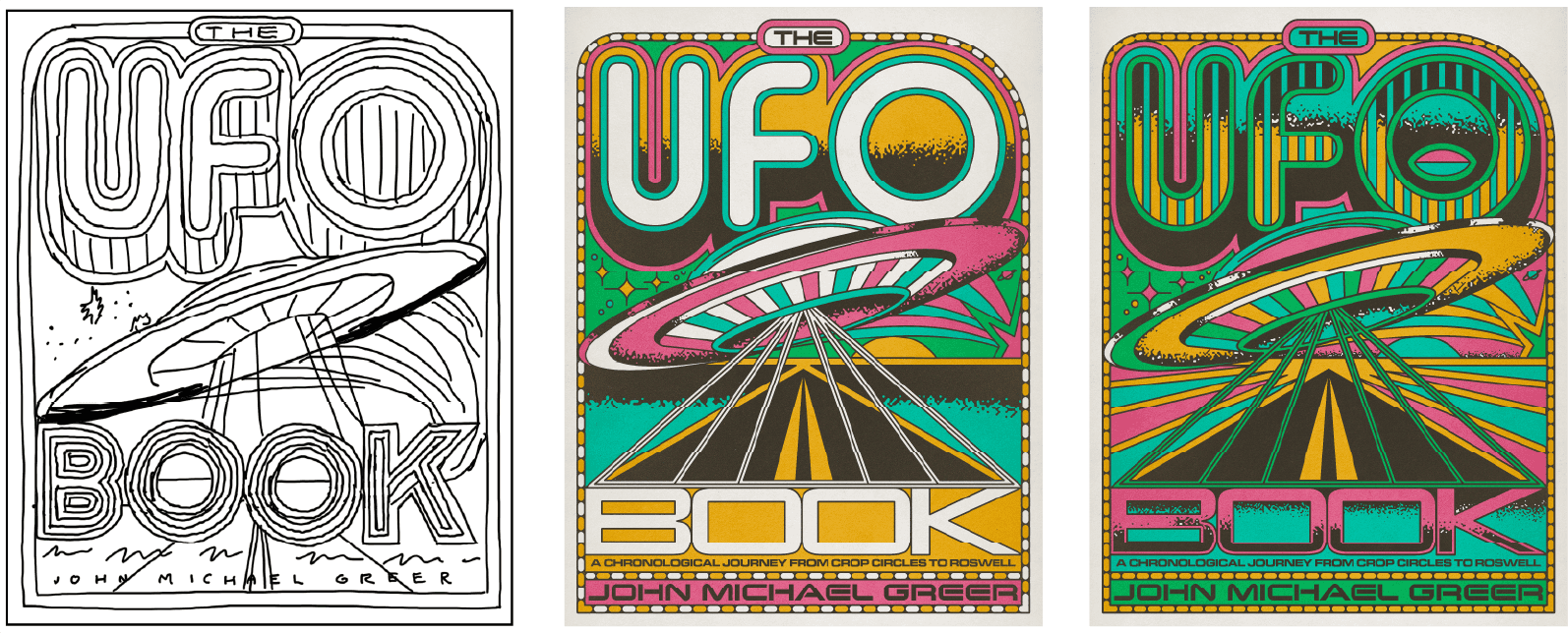
Artists, it could actually be worth having something like this in your back pocket in case you need it. Sketches are meant to look unfinished and being able to show how a piece evolves from sketch to final can help in one of those “oh, this is looking a bit rougher than we imagined” moments!
It's helpful for everyone to have guidelines in place for creative feedback. It also helps everyone be able to identify when requests are heading towards that sneaky scope creep territory. And if there’s been a change in brief or a concept overhaul, then it’s clear when that's something new to discuss!
If we've ensured that everyone is on the same page at kick-off, then there shouldn’t be any surprises at all when the feedback starts coming through.

Aaron Lowell Denton, Artist"Thinking about this topic in general, it's interesting the difference in process depending on the client and type of project. For publishing, there's so many layers of approval to go through (editor, publisher, author), for editorial it's fast and intense, and for music projects it's more personal and introspective."
More is not more
It's also worth remembering: more is not more. Being confident in your ideas and presenting a small number of strong concepts, rather than as many options as you can possibly think of, tends to make the decision easier for a client, not harder. The more variations someone's faced with, the harder that decision often becomes, and a harder decision usually means more rounds of feedback trying to close the gap.
The Da Vinci Decode
The second job of an artist, after creating a masterpiece, is to learn how to decode the feedback.
Clients, this one is for you: 'make it pop' is fun to say, but it doesn't give your artist much to run with. You don't need to hand over the creative solution though, that's the artist's job. What helps most is naming the problem. What isn't the piece doing yet for what you're trying to achieve?
My goal here isn't to turn every client into a professional Art Director, it's to help you put words to what's not working, so your artist can find the right creative solution for it. Let's get into the good, bad, and the ugly of it all and a few ways we can swap vague, taste-based notes for something specific and actionable:
Client
“I'm thinking more pizzazz, you know, more oomph!”
Artist
“Love that energy! Are we thinking we revisit the colours, or would more movement and energy in the pose itself do the trick?”
What the client could say instead: We want this to feel more energetic and eye-catching, right now it reads a bit flat and static.
Client
“Can we make it feel more premium?”
Artist
“Totally get that. When you say premium, are we thinking of going more minimal with the elements, or perhaps a deeper colour palette like my reference here?”
What the client could say instead: We're going for a more premium, sophisticated feel, and right now it reads a little too bright and busy for that.
Client
“Something's off, but I can't say what.”
Artist
“No worries, let's narrow it down. Does it feel off in the composition, the colours, or somewhere more specific, like a particular element?”
What the client could say instead: Something about the balance feels off, I think [element] might be pulling too much focus compared to everything else.
Artists, once you've got the specifics, it's worth playing it back before you start. This could be something like: “so I'll update the palette and keep the composition as is, sound right?” or, “confirming that we'll reduce the size of element a and increase the dominance of element b”.
A quick confirmation now saves a wasted round later!
If you don’t have anything nice to say, don’t say it…
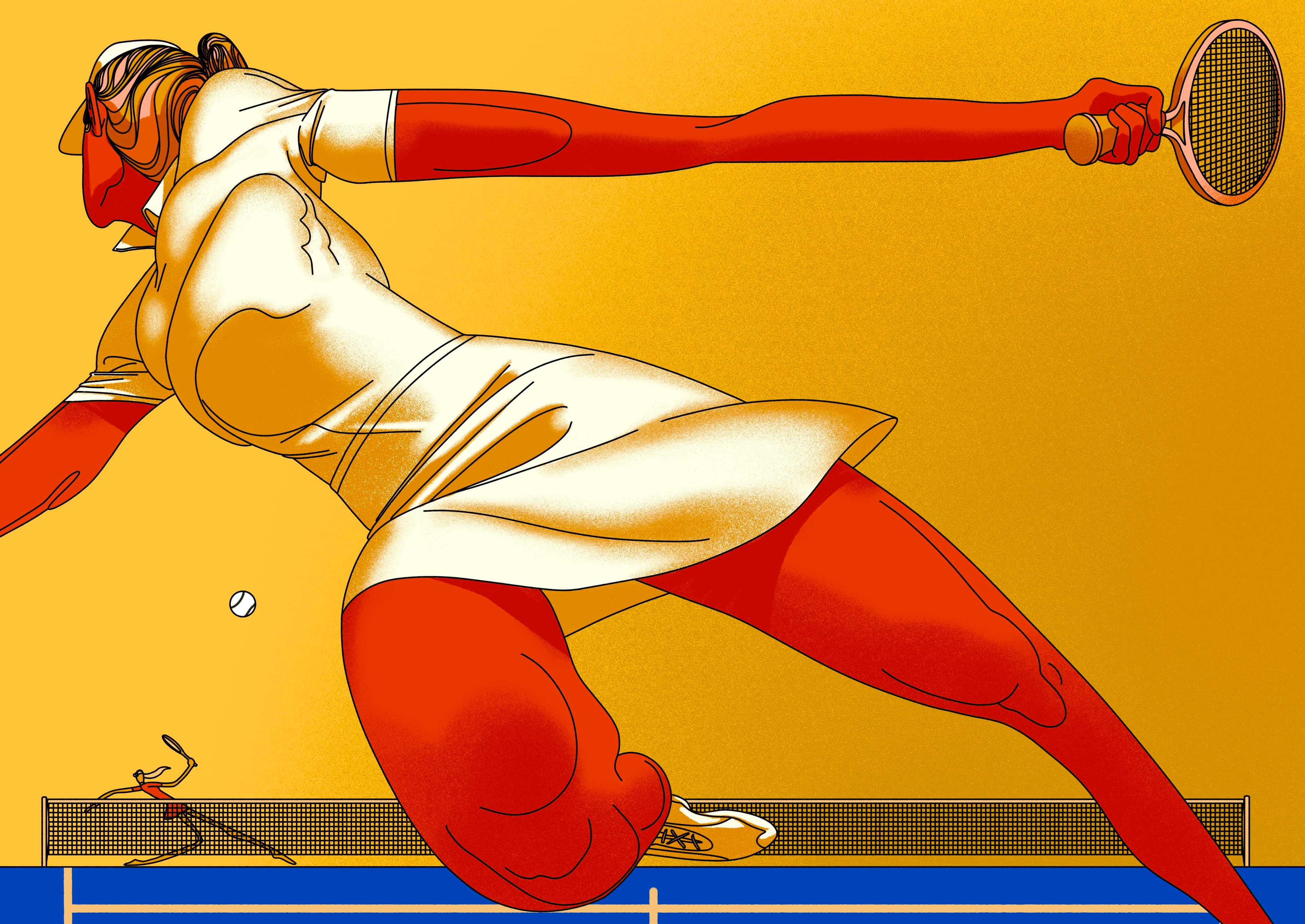
Can be a little hard to adhere to when you do in fact need to give critiques, I get that! There’s no point delivering an unclear message just because you’re worried about hurting someone’s feelings. Especially on commercial projects as we know that personal opinion isn’t the only thing to factor in. Being specific matters, but so does being kind about it.
There are all sorts of reasons that changes to an artwork may be requested and none of them should be taken personally. That said, clients, an acknowledgement of the hard work that’s gone into each round so far never goes amiss. Artists, don’t forget that clients or agencies can also be stuck in the tricky position of consolidating a lot of voices and feedback. They’re probably doing their best too and may be just as frustrated with the feedback as you.
I promise you, we’re all on the same team at the end of the day! 🤝
The Real Verdict
The anxiety-inducing spiral of endless amendments and files named finalFINALv3_05_actual_4real.jpg doesn't have to be your reality. Most of that back-and-forth can disappear before it even starts, once both sides commit to clarity: references, good questions, and specifics instead of vague notes.
The lesson here is to drop any of your defences and become an expert at getting your vision across clearly, whichever side of the brief you're on.
So perhaps no one is really guilty at all... we're all just picturing different apples.
Newsletter
About the author
With a degree in interior design and a background in both TV and photography production, Emma is well-versed in the challenges that any creative project may present. Emma loves combining her creative eye with the project management skills she has developed throughout her career to achieve great (and aesthetically pleasing) results.