Dear Jacky:
What do successful artists do during slow periods?
This may sound familiar: You’ve just wrapped a big project or maybe many projects. The deadlines are behind you and your inbox has finally calmed down. For the first time in weeks or maybe even months, you have a little breathing room.
At first, that breathing room feels pretty great. Then a few days pass. Then a few weeks. No new briefs appear and the calendar starts looking suspiciously empty. What felt like a much needed break begins to feel a lot more uncomfortable. Suddenly, you’re staring at your inbox wondering if everyone in the creative industry has collectively gone on sabbatical and forgot to tell you. Hello? Is anyone out there?
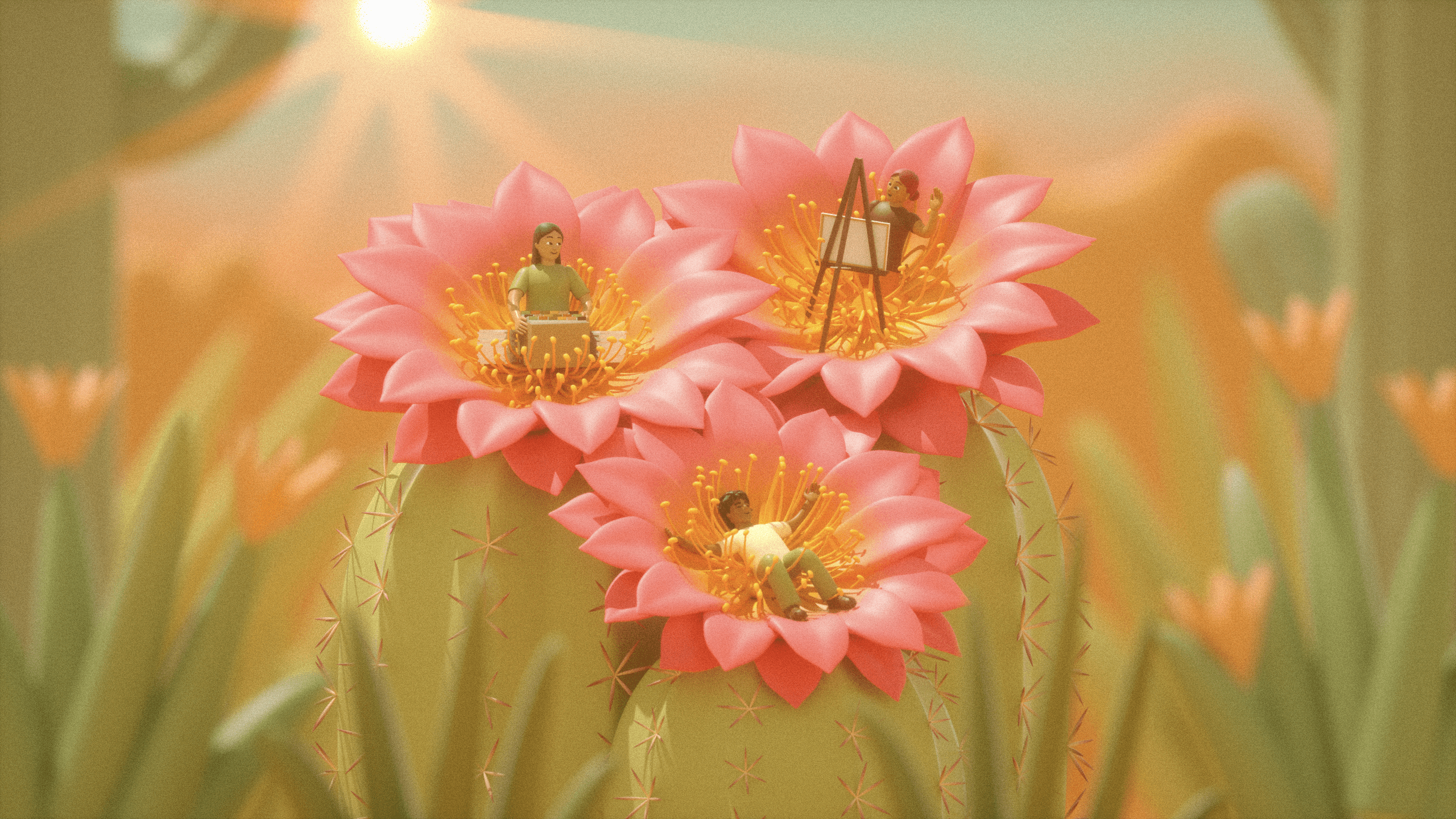
Every artist I’ve ever worked with has experienced dry periods like this, regardless of where they are in their career. From emerging talent to some of the most established artists we represent, creative work rarely arrives in a neat, predictable stream. There are busy seasons, slower seasons, and occasionally an extra quiet stretch that has you convinced it’s all over.
Spoiler: it’s not.
What I have noticed, though, is that the artists who build long, sustainable careers tend to approach these stretches with specific intentions that help them weather the drought. Rather than treating this as time spent refreshing their inbox and praying to the briefing gods, they use them to invest in parts of their practice that are much harder to prioritize when client work is in full swing.
How I respond to slower periods really depends on the mindset I’m in, and what my body is telling me at the time. They can still cause anxiety, and it’s hard not to see them as a reflection of your value or career. I’ve just become better at recognising that they pass, and that sometimes I need to promote myself, sometimes I need to make something, and sometimes I simply need to rest.
Here’s what that often looks like in practice.
They Reconnect With Their Personal Creative Practice
One of the first things I notice successful artists doing when work slows down is returning to personal work. When you’re in the middle of a busy client schedule, it’s easy for the ideas sitting in your sketchbook or notes app to get pushed aside. A slower period can open up the perfect amount of brain space to revisit them. Maybe that’s experimenting with a new medium, exploring a subject you’ve been wanting to tackle, or finally starting that self-initiated project you’ve been talking about for years.
It can also be a great opportunity to create personal work related to the kind of work you’d like to be hired for. Is there a dream client you’ve had your eye on? What kinds of projects do they typically commission? For example, if one of your goals is to work on campaigns related to the 2028 Olympics, are there sports-related personal projects you could create now that demonstrate your perspective and capabilities in that space? If you’d love to work on book covers, can you design a few for novels you enjoy?
While I’m immersed in commercial projects, my mind rarely stops generating ideas for personal work. Sometimes inspired by the brief itself; other times entirely unrelated. I keep a long list of these concepts so that whenever there’s a gap between projects, I already have somewhere to begin. It’s a habit that helps when the conceptual tank feels empty. That ‘idea list’ means I’m never staring at a blank page, waiting..
Some of the strongest portfolio pieces I’ve seen started as projects with absolutely no commercial objective attached to them whatsoever. Others began as intentional exercises designed to attract a specific type of work. Either way, a surprising number of dream projects start with personal work, so don’t forget to share what you’ve been making.
They Audit Their Folio and Instagram
Speaking of sharing what you’re making, slow periods are often when successful artists tend to take a good hard look at their portfolio and Instagram and ask themselves whether they are still showcasing their best work and, more importantly, the work they want to be doing more of.
I’ll be the first to admit this is rarely anyone’s favorite task. Updating your website with recent projects, finally removing that piece you’ve outgrown, refreshing older work, or reorganizing your portfolio so your strongest projects are doing the heavy lifting isn’t nearly as exciting as making new work. That’s probably why it gets pushed down the to-do list for so many artists.
Listen, I hear you BUT put yourself in the headspace of your dream client. If they landed on your folio today, what would they think you want to be hired for? What projects would stand out? What work feels out of place? A slow period can be the perfect opportunity to close the gap between the work you’re showing and the work you’d like to attract.
If I’m actively looking for work, I’ll usually focus on self-promotion whether it's sharing something, updating my website or newsletter, or refreshing my portfolio. It helps me feel like I’m doing something practical rather than simply waiting.
The same goes for Instagram. Many art buyers, creative directors, and producers are sourcing talent there every day. In some cases, they’re spending less than ten seconds deciding whether they want to work with you based on what they see on your feed. Try looking at your profile through their eyes. Is there a clear point of view? Does the work reflect where your practice is today and where you’d like it to go next? Does it look like you’re actively taking on commercial projects or exploring new ideas?
Think of it as the time to curate your folio for the opportunities you want next, not the opportunities you had five years ago because at the end of the day, you can’t be commissioned for work people don’t know you can do.
They Invest in Relationships
One of the smartest ways artists use quieter periods is by reconnecting with the people in their creative orbit. Reach out to a past client, share a recent project with someone whose work you admire, attend an industry event, join a critique group, or simply make time to catch up with and support your peers.
More often than not, opportunities come from relationships that already exist. An art director you’ve worked with before changes companies and remembers your work. A friend recommends you for a project. A former collaborator reaches out because your name came up in a meeting. These kinds of opportunities are usually the result of connections that have been nurtured over time, not just cold outreach sent the week you need work (although that’s still worth doing too!).
And if you’re represented, a slower period is also one of the best times to reconnect with your agent. These quieter moments often make room for the most valuable strategic conversations. A good agent (hi!) should be thinking beyond your next project, helping you identify gaps in your portfolio, opportunities for outreach, industries you’d like to break into, and ways to position your work for the types of clients you want to attract.
Creative careers need community to thrive. The stronger your network of genuine relationships, the more likely it is that opportunities will find their way back to you when the next busy season rolls around.
They Grow Their Skills
The artists who build long, sustainable careers are usually the ones who stay curious. They continue learning, experimenting, and expanding their skill set, and slower periods are the perfect opportunity to do that without the pressure of a client deadline hanging over your head.
Maybe you’ve always wanted to learn how to animate your work but never had the time to get past the first tutorial. Or maybe you’ve been curious about 3D and are ready to finally give Blender a try. Perhaps you’ve been thinking about creating more social content and want to experiment with sharing your process, documenting your work, or simply getting more comfortable on camera.
I often use slow times to learn new skills, like motion graphics or jewelry making. Experimenting with new materials brings fresh ideas to my client work, and clients definitely notice and value that.
It’s also a great time to strengthen the business side of your practice. Understanding topics like pricing, negotiation, licensing, and contracts (especially if you’re not represented) may not feel as exciting as learning a new creative tool, but those skills can have an enormous impact on your career over time.
The skills you develop during a quiet season might not feel like they’re paying off immediately. But months later, they often become the reason you’re able to say yes to an opportunity that wouldn’t have been possible before.
They Get Organized
This one isn’t particularly glamorous, but it might be one of the most impactful. Slow periods are when successful artists get organized.
Maybe that means finally tackling the desktop that’s become a graveyard of files named “final_final_v3_ACTUAL_FINAL.OMG.psd.” Maybe it’s creating proposal templates so you’re not starting from scratch every time an enquiry comes in, organizing client contacts, setting up a project tracker, or taking a closer look at your finances. Things like budgeting, tax planning, and savings goals aren’t usually the reason people become artists, but they play a big role in building a sustainable creative practice.
The reality is that a lot of the stability in a creative career comes from work that nobody sees. The systems, processes, and habits you put in place during a quiet period are often what make it easier to navigate the busy ones. Future-you will be incredibly grateful that present-you spent an afternoon organizing those invoices.
They Rest Without Guilt
And finally, sometimes the most productive thing artists can do during a slow period is absolutely nothing. Creative work requires a tremendous amount of mental energy, and many artists move from one deadline straight into the next without giving themselves much time to recharge. A quieter season can be an opportunity to slow down, catch up on sleep, and recover from burnout before it arrives or to address it if it’s already knocking down your door.
Rest also creates space for inspiration and play. Creative ideas rarely arrive when we’re hustling or staring at an empty inbox willing them into existence. They tend to show up while wandering through a museum, reading a novel, traveling somewhere new, having dinner with friends, or simply paying attention to the world around us. Inspiration needs input, and slower seasons give us the chance to find it.
I feel that these "dead" moments, even with the pressure and uncertainty they bring, push us to make the most honest choices with our work. It’s not always as beautiful as it sounds, these periods are full of emotions, but they lead to the most memorable places. Years ago, entering a contest during a slow season actually led me to illustrate live at the Cannes Lions festival!
If there’s one thing I’d encourage artists to remember, it’s that a slow period is not necessarily a sign that something is wrong. Every creative career has cycles and while you can’t always control when the next project arrives, you can control what you do with the time in front of you.
In many ways, the work that happens during quieter seasons is what makes the busy seasons possible. The portfolio update that catches a client’s eye. The relationship that turns into a referral. The personal project that evolves into a dream commission. The new skill that opens an unexpected door.
So the next time you find yourself staring at an unusually empty calendar and wondering whether you’ll ever be commissioned again, try not to panic. Instead, tap into these drought tolerant skills and consider that this season might be making space for the best growth of your life.
Newsletter
About the author
Alysia Alex is an agent and producer on Jacky Winter's US team. She loves staying tapped into the creative community, always looking for meaningful ways to support artists and the work they’re creating. Prior to joining JW, she worked extensively across the arts, design, and creative production. Notably, she led Creative Careers at the ArtCenter College of Design in Los Angeles, developing programs that helped artists and designers build sustainable practices and connect with real-world opportunities. In every role, her focus has always been advocating for artists and creating the conditions for creative work to thrive.