Dear Jacky:
How can I quote confidently when client budgets and expectations are so varied?
Lead Agent & Producer at Jacky Winter Melbourne, Ree Shelton, shares tips for building a quoting system that works for your practice, outlines budget expectations across different industries, and shares her perspective on what technological advancements might mean for the road ahead.
“The best things in life are free, but you can leave them to the birds and the bees. I want money.”
I couldn’t agree more, Flying Lizards. Money. Let’s get into it.
Why does one illustration cost $500 for an editorial article, while another illustration that takes the same amount of time to create can cost $10,000 or more for an outdoor campaign?
Few topics create more anxiety for illustrators than quoting: how much should you charge? Through Choreus, a service we provide to freelance artists, we offer consultation calls to support artists navigating tricky projects. We've found that this question sits at the heart of many of those sessions. You've received a new brief, the client "doesn't have a set budget," and they need a quote from you. Maybe they're in an industry you're unfamiliar with and you're thinking, "where do I even start?!"
When you know the financial ecosystem a project lives in, you’re better equipped to quote confidently, negotiate without fear, and decide whether the opportunity aligns with your goals. It also helps remove the emotional charge from pricing. Instead of wondering, “Is this too much to ask?” you begin asking, “Is this appropriate for this type of client and usage?”
There’s no single formula to quoting as every practice is different. Industry aside, how you quote is shaped by how frequently you work, your level of experience, living expenses and personal circumstances. The intention for this article is to provide a guide on how you can price your illustration practice with confidence.
So, where do we begin….
The best place to start is to consider how you want to charge for the time you'll spend creating the artwork. This time is what forms your “creation fee”. It would involve a combination of concept time, sketching, revisions and the final rendering of the piece. To calculate your creation fee, you could charge a daily rate, an hourly rate, or a cost per illustration.
Jessica Hische's guide The Dark Art of Pricing is a brilliant resource to help set up your creation fee rates. Her guide helps you figure out your required salary (covering cost of living and taxes) and your desired salary (cost of living, savings, and extras). Working out these two figures gives you a hard line to draw for your minimum rate, and a north star for where your ideal rate should land.
A useful approach to calculate your creation fee is to estimate how many days the full process will take (factoring in revision rounds and client feedback) and use that as the basis for your creation fee. Let’s say a client comes to you with a brief for a single illustration and you estimate the full process will take you two days. If your day rate is $1,200 per day, two days of work will come to $2,400. That’s your creation fee. From there, you can present it to the client however works best, as a single flat fee per illustration ($2,400 for 1 x Illustration) or broken down by development milestone 2 x Days @ $1,200 per day = $2,400).
Beyond the physical time required to create the artwork, there's also pricing for the usage of the artwork. Creation covers your time and labour, while Usage (or licensing) covers how the client uses your work. Factors to consider here include the duration the work will be in circulation for, the different media applications (eg. TV, OOH, Social, Print) and also the different geographical territories where the work will be seen. By separating Creation fee and Usage fee, this allows you to have a starting point that covers you for your time, while also allowing you to scale your fee according to the client’s required usage.
Another useful clue to assist your quoting often sits with who the client is and how much money they have behind them. Research the client before you quote. Look at their website, their campaign history and their presence in the market. Are they spending on paid media? Are they investing in production? Is this a client that spends six figures on a TV commercial but only offers $500 for illustration work on a campaign with similar media spend? This is useful information to have when quoting and considering if a job is worth taking on.
Beyond size, how critical is the illustration to the project’s success? If illustration is the backbone of a campaign that will drive engagement, sales or brand recognition to the client, then the budget should reflect that importance. I like to think about how many eyes will see the artwork. The more eyes = the more valuable the artwork is for the client.
Ok, but how will differences between industries affect how I quote?
Understanding how illustration budgets operate across different industries becomes essential. When you’re quoting for a job blind, or deciding whether a project is worth your time, the industry context behind the brief often matters more than the brief itself. Two commissions with identical deliverables might look the same on paper, but sit on opposite ends of the budget spectrum depending on who the client is, what they stand to gain, and how the work will be used.
We've put together a transparent pricing overview on our website here, that we hope will give you a solid foundation for quoting with confidence. The figures represent the average we've identified across similar projects with similar usages. These should be used as a general guide, as not every project is the same. I’ll quickly share a recap on some key differences you might experience within the different industries below:
Publishing is often where illustrators first encounter the tension between creative satisfaction and financial sustainability. Margins are tight and budgets usually reflect that. Children's book advances in particular can be deceptively low once you break the fee down per illustration and factor in the time involved. The key consideration here is usage and the royalty arrangement that is offered in the contract. Always ask how the book is being distributed, across how many markets, and for how long. On the flip side, publishing projects can be incredibly fulfilling so if you're passionate about the project then there's genuine merit in taking it on. Modest advances can be offset by royalties if the book performs well, making it a potential source of long term passive income too.
Naomi Perry, Gildlings Agent & Producer"An advance is an upfront payment made against future royalties. You receive this money regardless of how the book performs and then, if enough copies sell to "earn back" that amount, additional royalty payments begin to flow. "Earning out" doesn't mean the book has sold as many dollars in retail as the advance was worth. It means the publisher has made back the advance from your royalty cut. If you got a $10,000 advance, it actually takes way more than $10,000 in retail sales to earn out the advance, because you're only earning a few dollars (or less) from each copy sold. The more widely a book is distributed, the greater the chance of reaching readers and eventually earning out your advance. Strong distribution can also increase opportunities beyond the initial edition, including foreign rights sales, audiobook editions, and other subsidiary rights deals, all of which can help earn out your advance, or generate additional income. It's important to note though that a lot of books never actually earn out their advance, which means that the advance often represents the entirety of what a creator will receive from a project."
Editorial illustration is one of the most beloved, yet most financially frustrating corners of the industry. These commissions are usually tied to short turnaround times, limited usage, and more often than not, set rates that are usually determined before the brief lands with the artist, so it’s pretty rare you’d be asked to quote on an editorial commission. The trade off is visibility and relevance. Editorial work can broaden an illustrator’s reach in an instant. Many artists accept these jobs knowing they are unlikely to be financially transformative, but valuable in other ways. An artist might work on a New York Times article and will receive commercial enquiries off the back of it due to another client seeing their work in the publication. Most often you'll be working with just one key contact providing feedback. When there are fewer people shaping the work, it allows you to engage in a deeper level of conceptual thinking, which can be incredibly fulfilling. Editorial is where you get to stretch yourself and take those stylistic risks! One thing to keep in mind here is to ensure you’re finding an efficient way to produce the work so the fee can align accordingly to the time you spend on it.
Commercial projects, by contrast, allow much more budget flexibility as the scope is so varied and very much set on a project-by-project basis depending on the client, the artist, the usage and the scope of work. Here, we're using the term "commercial projects" to cover illustration commissioned for things like advertising campaigns, brand identity material, packaging and product design. Basically, anything a company uses to put its image in front of consumers. When illustration is used to sell a product, the artwork becomes directly tied to revenue. Budgets often increase accordingly, particularly when the illustration plays a central role in the brand’s positioning. Commercial projects usually mean higher stakes for a company (financially and reputationally) so naturally, more stakeholders get involved, each weighing in with their own feedback. Out of all different types of illustration work, commercial projects are where factoring in extra time (and budget) for meetings and the likelihood of multiple rounds of revisions often becomes very important.
Your quote for commercial projects should acknowledge the long term value an artwork can hold. Budgets in the traditional advertising space are usually tied directly to media spend. The bigger the campaign, the more eyes on your work, the higher the usage fee should be. This is where the concept of charging for usage rather than time becomes critical. As one art director (Tim Easley) famously put it: “A piece that takes a day is worth more to Coca-Cola than to a lemonade stand” - so charge accordingly.
It's also worth noting that the media landscape is rapidly changing as consumer behaviour shifts from traditional platforms towards online. Only a few years ago, broadcast usage would warrant a significantly higher percentage than what online was traditionally known to cover (banner ads, client websites, unpaid social media). Today, we consider online usage to have equal (if not larger) value than broadcast.
With the influx of media spend moving online, the value clients see in engaging an artist to promote their product directly to consumers has grown too. Through Capital Virtues (our artist-led creator agency), we're seeing first hand how clients are increasingly spending in ways once considered untraditional, paying artists to organically promote their product and pushing the spend through paid social for reach directly targeted towards their marketing audience. Rarely do these collaborations ever end up on traditional broadcast platforms.
Environmental and Activations includes things like murals, retail installations, pop-up experiences and event activations. It's one of the most inconsistently budgeted areas in the industry as the scope varies enormously. Budgets are often influenced by scale, production costs, and the lifespan of the work. What might seem like a generous budget at first glance may shrink once fabrication, logistics, and installation are factored in. This is why it’s especially important to understand where your illustration fee sits within the wider production budget. When considering any environmental or activation briefs, take the time to map out what the brief is asking for. Calculate hard costs, material costs, permit fees, artwork development time and, of course, usage (we love usage!).
Industry differences aside, some projects are portfolio defining regardless of the budget. They align perfectly with your interests and attract the kind of clients you want to get more work from whereas other projects are purely about cashflow. While excitement to work on a particular project doesn’t replace fair compensation, genuine enthusiasm for a brief can influence how you experience a project and what you’re willing to compromise on. When you understand why you’re saying yes to a job, it becomes easier to accept its financial realities or to negotiate them. Work you're excited about tends to be better work. Better work leads to better outcomes for the client, which leads to repeat work and referrals.
How Budgets Have Shifted in Recent Years
Illustration budgets have not remained static. Over the past few years in particular, many artists have experienced increasing pressure that has been driven by shrinking advertising revenue and consolidation within media. Some commercial and brand-led projects have expanded in scope too, with clients expecting more deliverables across more platforms without always increasing fees proportionally.
What has changed most noticeably is the emphasis on usage and adaptability. Clients want work that can live everywhere, and artists who understand how to price that flexibility are better positioned to protect their value! We get so many requests during production where a client might casually ask the artist “can you film a work in progress video?” or “can you film a short interview for our website and socials?” These requests might feel minor, but they take time and effort, so it’s only fair the artist is remunerated, so please quote for your time here.
The post-pandemic creative boom when agencies were prioritising illustration and animation talent and paying well for it has quietened. Budgets have compressed, timelines have shortened, not to mention the introduction of AI. But the picture isn't completely bleak! As AI becomes more accessible, the value of human made work has sharpened. Clients who care about voice, authorship, and originality are often willing to pay more for artists who bring a recognisable point of view which is something AI can’t replicate. It’s been a super exciting evolution to see play out in real time. One of the most encouraging trends to watch is the growing appetite among global brands (and audiences) for organic, hand-rendered styles. Authenticity is having a moment and illustrators are at the centre of it!
We’ve covered a lot! Quoting truly is a beast and it’s not easy, and you won’t always nail it. The good news is that it gets easier over time. As your experience grows, you'll start to recognise the value of a brief almost instantly, allowing you to quote accurately for your time and confidently based on what your work is worth to the client. Beyond understanding budget differences across industries and knowing your own financial goals, keep these key takeaways in mind…
- —•Charging appropriately isn't just about you! When you charge accordingly, you sustain the broader creative community and establish your value to clients. When you quote, you're communicating facts about your work so confidence is crucial.
- —•You're billing a business, not a person. Even if it’s an individual that reaches out, you're almost always invoicing a company so understanding this will take out the emotion that often can come into play when quoting and discussing a project with a client.
- —•Always have a contract or written agreement in place no matter how small the job is. A good agreement should outline the scope of work, deliverables, timelines, usage, copyright or IP ownership, and payment terms. A draft contract received from a company is always available to be edited by you too, so never sign terms you don’t agree with just because it’s in the client’s contract.
- —•It’s always worth weighing up personal considerations too. Work that advances your practice, showcases your range, or puts your name in front of the right eyes has value beyond the fee attached to it. That doesn't mean you should work for free, but a prestigious brief at a slightly lower rate might be a deliberate, strategic choice. The key word is deliberate. Know why you're saying yes.
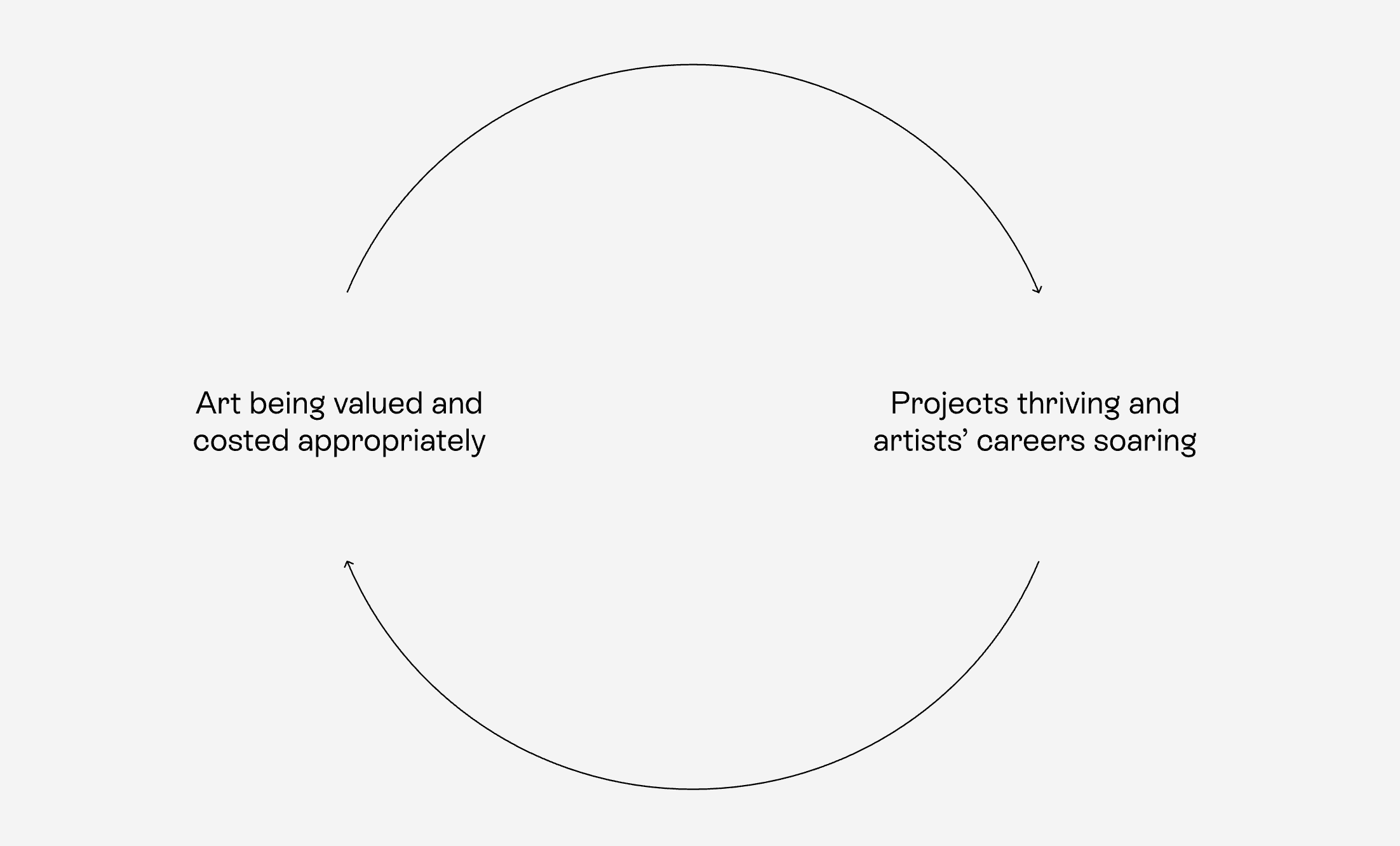
When you understand the financial logic behind a brief, you stop guessing. You stop apologising for your rates. You begin treating illustration not just as a creative practice, but as a profession that deserves clarity, respect, and sustainability. The best things in life may be free but your art is not! Price it that way.
Newsletter
Further Reading
About the author
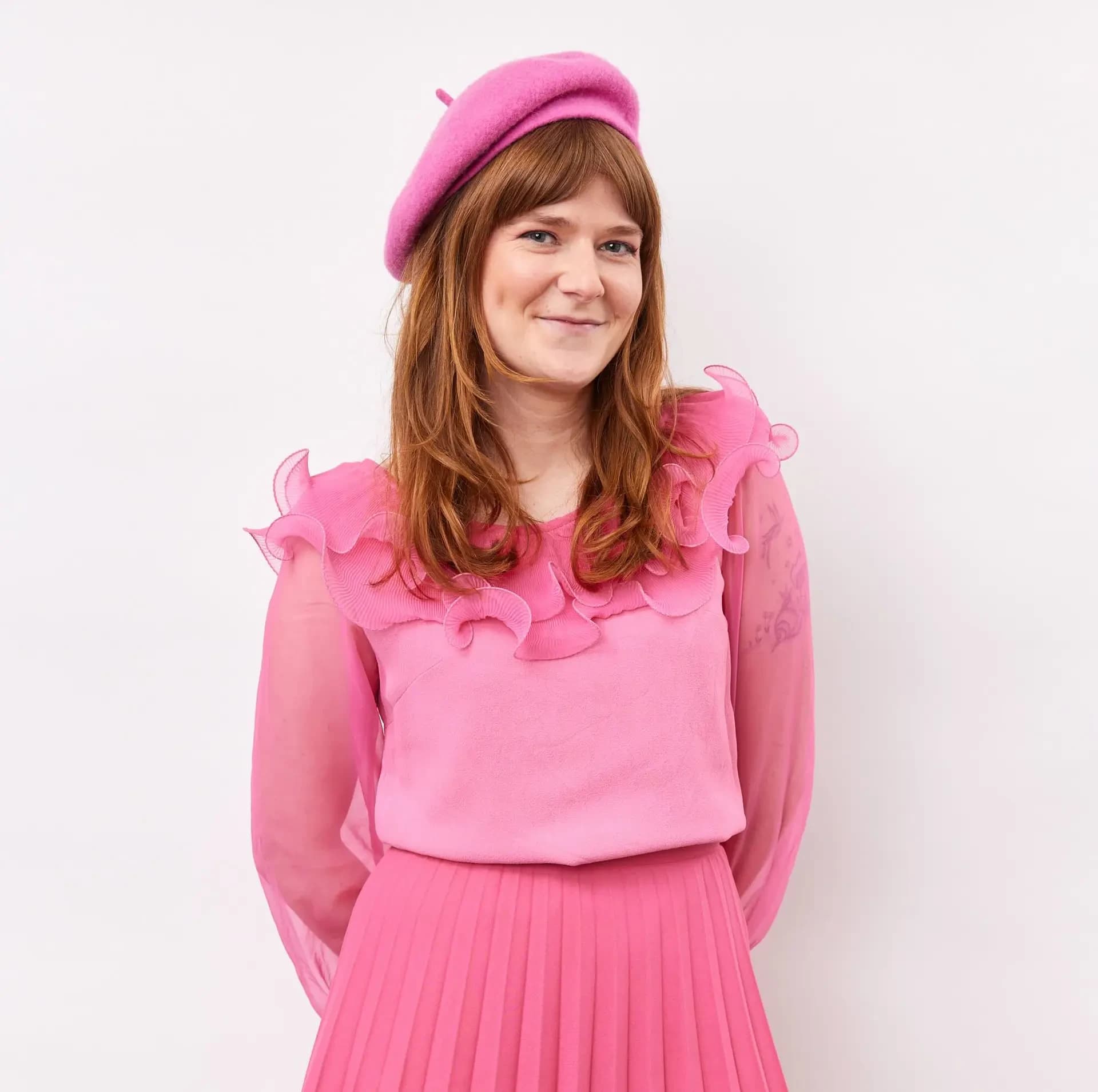
Ree is the Lead Producer of the Melbourne office. Her role balances new business development, artist management, and supporting the wider production team. Known for her creative rigour and deep care for every project she manages, Ree has led a diverse body of work stemming from local mural commissions to award-winning global campaigns.
Her time at Jacky Winter has shaped a strong understanding of how to uphold creative integrity for artists while meeting commercial objectives, delivering the highest standard of work across every project.